Activities


Tarragona
Tarragona and the southern Ebro region: a journey through nature, history and unique flavours
Very close to Peñíscola, a fascinating, diverse and richly nuanced territory opens up to travellers: the southern part of the province of Tarragona. A land where the River Ebro acts as the backbone of the landscape, history and everyday life. Following the calm course of this great river, visitors discover natural parks of enormous ecological value, monumental cities, charming villages and a gastronomy deeply rooted in the land and water. Southern Tarragona is an ideal destination for those seeking authentic experiences, far from mass tourism, and wishing to combine nature, culture and tradition.
Southern Tarragona, a land waiting to be discovered
The final stretch of the Ebro shapes a region of contrasts where wetlands, gentle hills, farmland and historic towns coexist. This area, bordering Catalonia and the Valencian Community, has for centuries been a crossroads of passage, exchange and cultural blending. Phoenicians, Romans, Muslims, Templars and Christians all left their mark here, creating an exceptional heritage that is proudly preserved today.
Travelling through southern Tarragona means slowing down and embracing a different rhythm. Time seems to move more gently here, inviting visitors to observe the landscape, savour the local cuisine and discover small details that turn each stop into a memorable experience.
The Ebro Delta Natural Park: a natural sanctuary
The starting point of this journey is the impressive Ebro Delta Natural Park, one of the most important natural areas in the western Mediterranean. This vast river delta forms a mosaic of lagoons, rice fields, unspoilt beaches and shallow bays that together create a true biodiversity hotspot.
The Ebro Delta is especially renowned for its birdlife. More than 300 species of resident and migratory birds find refuge here, making it a privileged destination for birdwatching enthusiasts. Flamingos, herons, stilts and osprey are a common sight in this unique landscape.
But the delta is not only experienced visually; it is also enjoyed through taste. One of the most distinctive experiences is the tasting of mussels and oysters in the middle of the sea, on the floating platforms located in the calm waters of the Fangar and Alfacs bays. This activity offers a firsthand insight into the area’s maritime and aquaculture traditions, while enjoying exceptionally fresh seafood in a spectacular setting.
The rice fields, which change colour with the seasons, define the character of the landscape and give rise to a local cuisine where rice takes centre stage. Cycling along rural paths, kayaking through canals or watching the sunset over the lagoons are just some of the experiences that make the Ebro Delta an unforgettable destination.
Tortosa: living history on the banks of the Ebro
Following the river inland, travellers reach Tortosa, considered one of the cities with the richest cultural heritage in southern Tarragona. Its strategic location beside the Ebro made it a key political, commercial and military centre for centuries.
Tortosa’s historic centre is an open-air museum. Strolling through its streets reveals a legacy spanning from Iberian and Roman times to the medieval and Renaissance periods. The Cathedral of Santa Maria, with its imposing Baroque façade and Gothic interior, is one of the city’s most iconic landmarks.
Overlooking the old town stands the Castle of La Suda, an ancient fortress of Islamic origin that today offers spectacular views over the river and the urban landscape. From here, the strategic importance of Tortosa throughout history becomes clear.
Historic bridges, stately palaces, old walls and distinctive neighbourhoods complete a city that invites visitors to explore it at a leisurely pace. Tortosa is undoubtedly an essential stop for anyone wishing to understand the history of the Ebro and southern Tarragona.
High-end gastronomy: Restaurant Villa Retiro
The experience in Tortosa is enhanced by a stop at a top-level gastronomic destination. Very close to the city lies Restaurant Villa Retiro, a benchmark of Catalan haute cuisine awarded with a Michelin Star.
Set in a peaceful and elegant environment, Villa Retiro combines tradition and creativity, using locally sourced and seasonal products to reinterpret the flavours of the region. Dining here is a sensory experience that connects the culinary richness of the Ebro with contemporary techniques, making it the perfect complement to a cultural journey through the area.
Miravet: the charm of a Templar village
Continuing upstream, travellers arrive at one of the most picturesque villages in Catalonia: Miravet. This small town, perched on a hill beside the Ebro, has preserved its medieval essence intact.
The main landmark of Miravet is its impressive castle, a Templar fortress built on the remains of an earlier Andalusian stronghold. Its silhouette dominates the landscape and offers one of the most beautiful views of the River Ebro, especially at sunset, when the castle’s reflection shimmers on the calm waters.
Miravet’s old town, with its narrow cobbled streets and stone houses, invites visitors to wander aimlessly. The village keeps traditional crafts alive, such as pottery, and conveys a sense of authenticity that is increasingly rare in more crowded destinations.
Miravet is a place to pause, contemplate the scenery and be carried away by the history that permeates every corner.
Pinell de Brai and the “Wine Cathedral”
The journey comes to an end in Pinell de Brai, a town that surprises visitors with one of the jewels of Catalan rural modernism: the so-called Wine Cathedral.
Officially known as the Agricultural Cooperative of Pinell de Brai, this building was designed by modernist architect Cèsar Martinell, a disciple of Antoni Gaudí. Built in the early 20th century, the cooperative combines agricultural functionality with a monumental aesthetic that fully justifies its nickname.
Inside, its parabolic arches and carefully designed lighting amaze visitors and highlight the importance of wine and agricultural cooperativism in the history of the region. Visiting the Wine Cathedral means understanding how architecture, economy and culture intertwine in the rural world of southern Tarragona.
A land of unique sensations
Southern Tarragona is much more than a collection of places of interest. It is a territory experienced through all five senses: the sound of the wind through the delta’s rice fields, the reflection of sunlight on the Ebro, the taste of seafood and garden produce, the feel of stone in historic villages and the aroma of wine and olive oil.
Each of the destinations along this route — the Ebro Delta, Tortosa, Miravet and Pinell de Brai — offers a different yet complementary experience. Together they form a coherent and nuanced destination, ideal for cultural getaways, gastronomic journeys or relaxed routes in close contact with nature.
An invitation to discover southern Tarragona
Exploring southern Tarragona means discovering a lesser-known yet deeply authentic part of Catalonia. It means following the course of the Ebro and understanding how the river has shaped the landscape, the towns and the way of life of its people. It is about enjoying protected natural spaces, exceptional historical heritage and a gastronomy rooted in tradition.
From oysters tasted in the middle of the sea in the Ebro Delta to the monumental Wine Cathedral of Pinell de Brai, passing through the history of Tortosa and the serene beauty of Miravet, this region offers unique sensations that remain with the traveller long after the journey ends.
Southern Tarragona is not just visited — it is felt. And those who discover it always want to return.
MORE ACTIVITIES



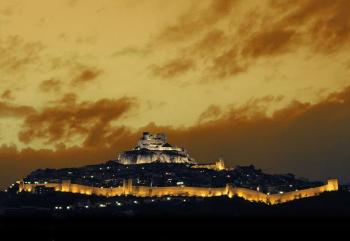


Prepara tu visita a Peñiscola y ven a vivir una experiencia de cine única. Peñíscola, con un patrimonio natural y arquitectónico singular, es una ciudad de excepción para todo tipo de acciones audiovisuales. Su ubicación estratégica, la ha convertido en escenario privilegiado para producciones tanto televisivas como cinematográficas. Desde principios del siglo XX, en 1913, con el rodaje de Ana Cadova, comienza la conexión entre el séptimo arte y nuestra ciudad. Peñíscola de Cine, aúna los enclaves más representativos de la ciudad plató.